
Applied Behavior Analysis (ABA Therapy) for Hartford Families
Focused, family-centered ABA services in Farmington to support meaningful progress every day.

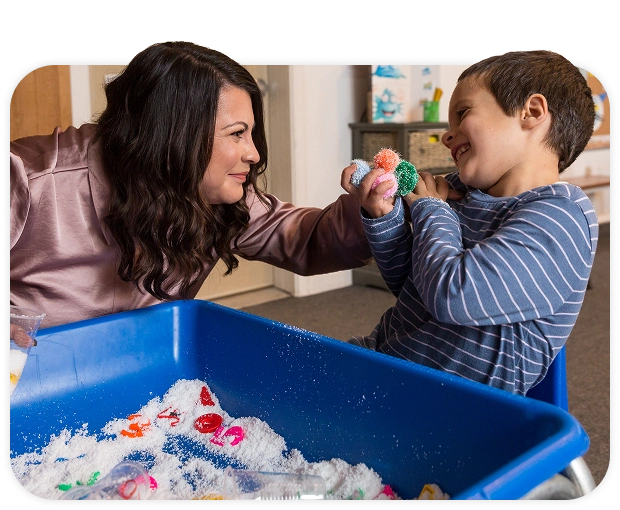










Applied Behavior Analysis (ABA) That Builds Real-Life Skills…With Heart
At Talcott, ABA services are delivered exclusively within our Comprehensive Day Program (ages 2-6) and our Evening Multidisciplinary Autism Program (school-age) to ensure fully coordinated care.
Rooted in decades of scientific research, ABA breaks down complex skills – like social interactions, communication, and daily routines – into small, measurable steps tailored specifically to your child’s learning style.

By gradually building these steps, your child progresses comfortably at their own pace, reducing challenging behaviors, increasing independence, and developing essential self-advocacy skills (such as requesting breaks or using coping strategies).
Our Board-Certified Behavior Analysts begin with a detailed, family-focused assessment. Then, we design a personalized plan that may include one-on-one sessions, small group work, and caregiver coaching.
Skills We Target Include
- Language & communication
- Self-care & independence
- Emotional regulation & coping
- Social interaction, cooperative play & peer communication
- Focus, safety skills, & school readiness
- Reduction of interfering or unsafe behaviors
- Self-advocacy (requesting breaks, independently choosing coping strategies)
- Family relationship strengthening
- Vocational & life planning for older children
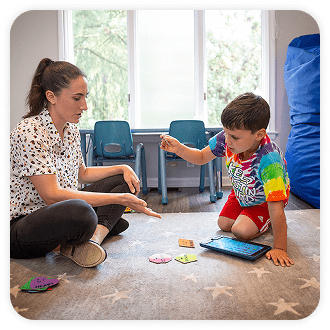


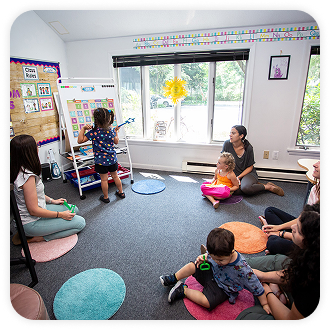
Comprehensive ABA ServicesTailored to Your Family’s Needs
Our evening program specifically emphasizes naturalistic, peer-supported social interactions. Through engaging group activities and play, your child will practice vital social skills like turn-taking, cooperative play, conversation skills, and smoothly transitioning between activities.
Evening program prerequisite skills typically include:
- Comfort with parallel play
- Simple communication (using at least 1–2 word phrases)
- Ability to safely transition between activities
- Participation in structured play tasks
Our skilled ABA therapists provide individualized sessions, thoughtfully fading support as your child’s independence grows. We integrate key skills into daily routines and peer interactions, ensuring meaningful and measurable progress.
We empower families with practical strategies and ongoing support to encourage consistent progress at home and in the community. Consultations are available as part of either program’s care path –ensuring your family feels confident and equipped every step of the way.

Progress You Can Measure
When you’re considering care for your child, you want to understand what progress could look like. Here’s what it’s looked like in our Day Program.
80%
Average reduction in the developmental-level gap measured at admission
75%
Of children finished at or above the developmental level expected for their age
Based on Talcott’s historical Day Program VB-MAPP data. Outcomes vary depending on each child’s needs and response to treatment.
See how we measure the milestones behind these results.

Understanding Your Child’s ABA Plan
If comprehensive ABA has been recommended for your child (25 or more hours a week)¹, you may wonder how therapy hours connect to goals like communicating needs and participating in everyday routines.
The research below compares outcomes at different levels of therapy time. It provides context for discussing a plan that reflects your child’s individual needs.
When you contact us, ask how recommended therapy hours connect to your child’s goals and how progress would be reviewed.

Adaptive Functioning
Published research found that 32% of children receiving higher-intensity ABA achieved non-clinical adaptive functioning, compared with 11% receiving lower-intensity intervention. 2,3

Cognitive Development
Published research found that children receiving higher-intensity ABA gained an average of 22 IQ points, compared with 11 points for lower-intensity intervention. 2,3

Autism Severity
Published research found that 40% of children receiving higher-intensity ABA reached non-clinical autism severity, compared with 27% receiving lower-intensity intervention. 2,3
These findings describe outcomes in published studies. They don’t predict your child’s individual progress.
Research References
The research summarized on this page is supported by published evidence on comprehensive, high-intensity ABA intervention, including:
- Applied behavior analysis practice guidelines for the treatment of Autism Spectrum Disorder: Guidance for healthcare funders, regulatory bodies, service providers, and consumers. Council of Autism Service Providers (CASP). 2024.
- Behavioral Treatment and Normal Educational and Intellectual Functioning in Young Autistic Children. Lovaas, O. I. (1987). Journal of Consulting and Clinical Psychology, 55(1), 3–9.
- Long-Term Outcome for Children with Autism Who Received Early Intensive Behavioral Treatment. McEachin, J. J., Smith, T., & Lovaas, O. I. (1993). American Journal on Mental Retardation, 97(4), 359–372.
A Simple 3-Step Start for Your Family
Take the first step. Fill out this form to connect with our team and learn how Talcott can support your family’s journey.

Frequently Asked Questions
Applied Behavior Analysis (ABA) helps children learn new skills and reduce behaviors that get in the way of daily life. It’s structured, but play-based and built around your child’s strengths, their interests, and what matters most to your family.
At Talcott, that usually means working on communication, social connection, self-care, and the everyday routines that can feel hardest right now.
At Talcott, our approach is grounded in positive reinforcement, never punishment or pressure. Sessions are play-based, and support is gradually pulled back as your child gains confidence and independence.
Our Board-Certified Behavior Analysts (BCBAs) design every plan to affirm your child’s neurodiversity and respect the way they learn best.
For many children, yes. ABA is one of the most studied interventions for autistic kids, and there are decades of research to support it.
Most families see real, meaningful progress over time. That said, every child is different. As an ABA therapy clinic, we track progress closely and adjust your child’s plans regularly, so therapy keeps working as they grow.
Progress in ABA is gradual and often shows up first in small, everyday moments. Many families notice early changes within the first few months of consistent therapy, with more significant gains in communication, daily living skills, and independence typically becoming visible over 6 to 12 months of regular support.
Every child moves at their own pace, with timelines shaped by service intensity, consistency between clinic and home, and individual strengths and needs. What you can count on is that your child’s BCBA will track progress consistently and keep you informed every step of the way, so you’ll always know where things stand and where you’re headed.
ABA is designed for autistic children who need support building communication, social, self-care, and daily living skills.
At Talcott, we serve children ages 2–6 through our full-day Comprehensive Day Program, which provides individualized support across communication, play, and daily living skills.
School-age children are served through our Evening Multidisciplinary Autism Program, which centers on social skills development in a small-group setting.
Not sure if ABA is the right fit for your child? We’re happy to talk it through.
No, ABA therapy works alongside school, not instead of it. ABA builds the foundational skills children need to participate and thrive in a classroom.
Our Comprehensive Day Program is specifically designed to get children ages 2–6 ready for kindergarten with a focus on school readiness, social skills, and independence.
In most cases, no. Insurers usually require a formal autism diagnosis before approving ABA coverage, so pursuing an evaluation is often an important early step for families.
If your child hasn’t been evaluated yet, that’s okay. Many families come to us right at this point. Talcott offers developmental diagnostic evaluations to help you understand your child’s strengths and needs, and make sure the support they receive is the right fit from the start.
Not sure where to begin? Call us at (860) 674-1824, and we’ll help you figure out the next step together.
There’s no set endpoint – it’s a decision you’ll make together with your child’s BCBA based on their progress and what they need next.
Your child’s team will review goals regularly, and when the time comes, they’ll help your family feel confident about what comes after.
ABA services and speech therapy are different, but at Talcott, we work closely together.
Speech therapy focuses on language development, while ABA therapy helps your child use those communication skills across real moments throughout the day – at the dinner table, during a playdate, or out in the community.
Our ABA and speech-language pathology teams coordinate directly, so what your child learns in one session carries into everything else.
Sessions are hands-on and woven into your child’s day – 1:1 work with a therapist, small group activities, and skills practiced during everyday moments like snack time, transitions, or play.
Your child’s BCBA designs the plan and may use positive reinforcement, visual supports, and caregiver coaching, so what your child learns at Talcott follows them home and in the community, too.
ABA and feeding therapy are separate services, but they work well together.
At Talcott, feeding therapy is its own dedicated program using the evidence-based SOS Approach – addressing food aversions, trouble with textures or chewing, and mealtime anxiety in a gentle, play-based way.
In our Comprehensive Day Program, feeding support is integrated alongside ABA, speech, and OT, so mealtimes become part of the therapeutic experience rather than a separate struggle.