A Parent’s Guide to the Autism Diagnostic Process: Understanding Steps, Evaluations, and What to Expect
Table of Contents
Seeking a Personalized Assessment?
Connect With Us Today »Many parents reach a point where they notice differences in their child’s communication, play, or behavior and begin to wonder if something more may be going on. These questions often come with a mix of concern, curiosity, and a strong desire to better understand and support your child. Wanting clarity at this stage is natural, and it reflects how deeply you care.
Understanding the autism diagnostic process can help bring that clarity. It offers structure for making sense of what you’re seeing, explains who is involved along the way, and shows how each step contributes to a fuller understanding of your child’s development.
This guide walks you through the evaluation process from start to finish, from early questions and referrals to assessments, results, and the support that follows. Along the way, you’ll learn what professionals look for, what your child may experience, and how findings are used to guide meaningful next steps.
The Autism Diagnostic Journey: What to Expect
While the autism diagnostic journey can feel unfamiliar at first, how the process unfolds often helps families feel more grounded and prepared.
Autism, also called Autism Spectrum Disorder (ASD), affects how a child communicates, plays, interacts with others, and experiences the world. Because each child develops differently, evaluations examine multiple areas rather than relying on a single test or observation.
Clinicians gather information over time through play-based interactions, caregiver input, and carefully selected assessments to help professionals understand how your child engages, learns, and navigates their environment. Each step adds valuable context, highlighting both strengths to build on and areas where additional support may be helpful.
Preparing for an Autism Evaluation
Starting an evaluation can bring anticipation and uncertainty. A little preparation can make the day feel more predictable and supportive for both you and your child. When families know what to expect, the evaluation often feels less like a clinical appointment and more like a collaborative discovery process.
Preparation isn’t about doing everything “right.” It’s about creating conditions where your child can show who they are in everyday moments.
Gathering Information
The information you share helps clinicians understand your child beyond what can be seen in a single visit. These insights allow the evaluation to be tailored, thoughtful, and developmentally appropriate.
- Developmental History: Track early milestones such as first words, first steps, early play behaviors, and social engagement. Include medical history, prior evaluations, or early supports.Even noting when your child began using gestures, copying actions, responding to their name, or experiencing a change or loss of a previously learned skill provides valuable clues about early communication and social development.
- Behavioral Observations: Notice everyday patterns in play, responses to changes, interactions, and sensory reactions. Small moments – like reactions to new foods, playground equipment, or environments – often reveal meaningful insights.
- Document Gathering: Bring relevant medical records, prior assessments, therapy reports, or school documentation. Even your personal notes over several days can be helpful. This helps clinicians build on existing knowledge rather than starting from scratch.
- Family and Home Context: Sharing details about daily routines, interests, motivators, and comfort strategies helps evaluators create activities that feel familiar and engaging for your child.
Taken together, this information helps clinicians see your child in context, not just in the clinic setting. You can also ask your evaluating provider for guidance on what to bring or how to prepare – they can offer specific recommendations to make the assessment as smooth and informative as possible.
Emotional Preparation
Supporting your child emotionally is just as important as providing background information:
- Reassurance: Use simple, reassuring language to describe the day. Framing the evaluation as time spent with adults who want to play, talk, and learn about what your child enjoys can reduce anxiety.Emphasize exploration and curiosity rather than performance, and avoid presenting the experience as something to “pass” or “fail.”
- Bring Comfort Items: Bringing a familiar item – such as a favorite toy, book, or snack – can provide a sense of security and help with transitions during the visit.
- Support for Caregivers: It’s common for caregivers to carry their own worries into the process. Preparing by reading, asking questions, or connecting with other families helps you stay calm, which in turn helps your child feel safe.
- Practice and Familiarization: For younger children, brief practice at home – like puzzles or turn-taking games – can make the evaluation feel more familiar and less intimidating.
Who Performs the Evaluation?
Autism assessments are typically completed by specialists trained to diagnose ASD, such as a neuropsychologist, developmental pediatrician, LCSW, or clinical psychologist. These professionals gather information through structured interviews, observation, and standardized assessments to understand your child’s strengths, challenges, and developmental profile.
Psychologists and clinical specialists focus on cognitive, social, and emotional development using play-based interactions and structured activities. For example, a psychologist might introduce a turn-taking game to observe how your child responds to shared attention or social cues.
These assessments help families and providers see the full picture of your child’s development and guide next steps for supports and services.
What Happens During the Evaluation?
Autism evaluations are designed to feel engaging, flexible, and responsive to each child’s comfort level. The focus is on observing natural behaviors rather than placing demands on performance.
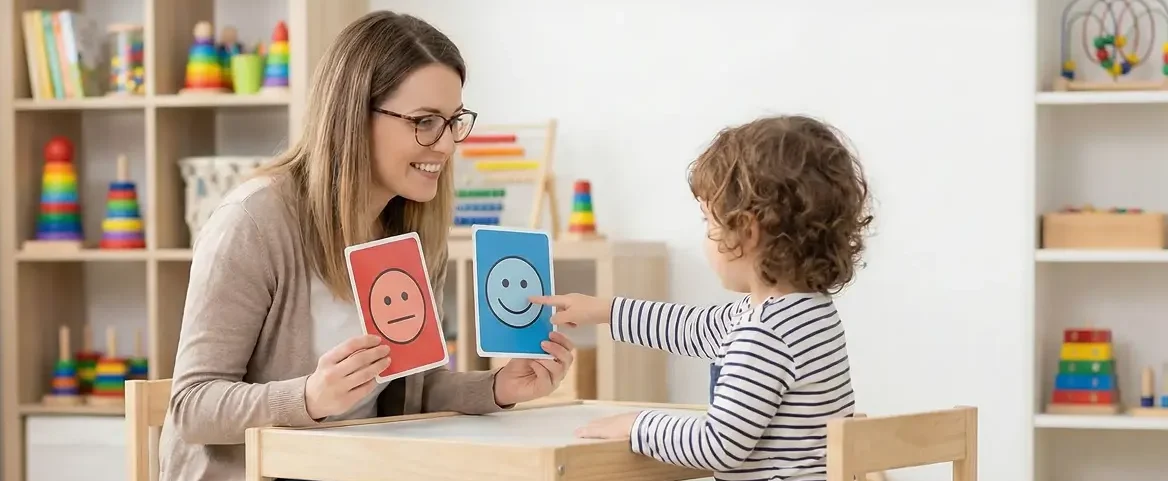
- Play-Based Assessments: Toys, games, and hands-on activities are used to observe communication, social engagement, problem-solving, and motor skills. A train set, for example, might reveal imaginative play, while a matching game can highlight attention and memory.
- Interactive Tasks: Activities such as drawing, puzzles, or storytelling allow clinicians to explore thinking, language, and social understanding while keeping the experience enjoyable. These tasks are adjusted in real time based on your child’s interests and responses.
- Observation of Daily Routines: Evaluators may also watch how your child manages transitions, participates in snack time, or interacts in small group settings. These moments often provide insight into how skills show up in everyday situations.
By using familiar, child-centered approaches, the evaluation captures meaningful information in a way that feels supportive and respectful of your child’s individuality.
Steps in the Autism Diagnostic Journey
Each stage adds insight, building a complete picture of strengths, needs, and developmental patterns. Understanding what happens at each step helps families move through the process with confidence and reassurance.
1) Recognizing Concerns and Seeking Referrals
For many families, the journey begins with noticing patterns that differ from typical developmental milestones. These may include:
- Delays in language or difficulty using words to express needs
- Differences in social connection, such as limited eye contact or challenges sharing attention
- Repetitive behaviors, strong routines, or highly focused interests
- Sensory sensitivities, like strong reactions to sounds, textures, or lighting
- Loss or regression of previously achieved skills or milestones – such as language, self-care, or daily living tasks – that a child once could do but suddenly stopped doing
A pediatrician is often the first stop to interpret observations, answer questions, and determine whether a referral for a formal evaluation is appropriate. Seeking a referral doesn’t rush a child or assign conclusions – it opens the door to understanding and support when it can make the greatest impact.
2) Clinical Interviews and Observations (Diagnostic Interviews)
After a referral, clinicians gather information through structured interviews and direct observation. Depending on the provider and process, these interviews and informal observations may be combined with standardized assessments that help clarify an autism diagnosis.
These sessions allow professionals to see how your child naturally engages in familiar, low-pressure situations. Observing play, interaction with others, and responses to activities highlights natural strengths and areas that may benefit from support.
Some assessments commonly used in diagnosing autism include:
- Autism Diagnostic Interview, Revised (ADI-R) – a detailed caregiver interview about your child’s communication, social development, and behavior patterns.
- Autism Diagnostic Observation Schedule, Second Edition (ADOS-2) – structured play and interaction tasks to observe social communication and repetitive behaviors.
- Vineland Adaptive Behavior Scales – measures daily living skills, communication, and socialization.
- Adaptive Behavior Assessment System (ABAS) – evaluates adaptive functioning at home and school.
Clinicians also reference criteria from the DSM-5, which guides diagnosis based on patterns of social communication differences and restricted or repetitive behaviors. Put simply, this helps professionals understand whether your child’s behaviors fit the profile of autism and where support can be most helpful.
3) Specialized Testing (Neuropsychological and Other Tests)
Specialized assessments provide a deeper look at how a child thinks, communicates, moves, and adapts to daily life:
- Neuropsychological Testing: Examines attention, memory, problem-solving, social reasoning, and executive functioning.
- Language and Communication Assessments: Led by speech-language pathologists to understand expressive and receptive language, gestures, and alternative communication methods such as visuals or AAC.
- Motor Skill Assessments: Physical and occupational therapists assess gross motor skills like balance and coordination, as well as fine motor abilities such as grasping, drawing, or using utensils.
- Adaptive Functioning Assessments: Explore everyday skills, including dressing, feeding, following routines, and managing transitions.
- Behavioral and Social Assessments: Observe social interaction, play skills, emotional regulation, and behavioral patterns that may inform future supports, including ABA-based services.
How assessments feel can vary depending on your child’s engagement. Some tasks may resemble games, puzzles, or interactive stories, helping children feel comfortable while clinicians gather meaningful information.
The goal is always to make the experience as approachable as possible, while accurately understanding your child’s abilities and needs.
4) Assessing Hearing, Vision, and Genetics
Screenings help complete the developmental picture by identifying or ruling out sensory or medical factors that may influence learning, communication, or behavior:
- Hearing Tests: Even subtle differences can affect language development and social responsiveness. Screening ensures communication challenges aren’t linked to an undetected hearing issue.
- Vision Screenings: Vision plays a key role in learning and interaction. Simple checks confirm whether visual differences could be affecting attention, play, or behavior.
- Genetic and Medical Assessments: In some cases, medical or genetic testing can provide helpful context for developmental differences. These assessments don’t identify a single cause, but they can inform planning and long-term support.
Understanding hearing, vision, and genetic factors allows clinicians to focus recommendations where they will have the most impact. For example, confirming typical hearing lets the team concentrate on supporting speech and language development rather than troubleshooting a sensory barrier.
Understanding the Evaluation Results
Receiving your child’s autism evaluation results is a key step in understanding their unique profile. While it can feel emotional, these insights help parents feel informed, empowered, and ready to support their child’s growth.
Interpreting Results: What Evaluation Reports Show
Autism evaluation reports provide a comprehensive look at your child’s abilities and challenges while determining whether the behaviors and developmental patterns meet criteria for an autism diagnosis.
Clinicians combine assessment results with the DSM-5 criteria, which describe patterns of social communication differences and restricted or repetitive behaviors, to guide the diagnostic conclusion.
Within the report, you’ll typically see:
- Confirmation of ASD Diagnosis (or not): Clear explanation of whether assessment findings meet the medical criteria for autism.
- Integrated Strengths and Areas for Support: Clinicians highlight your child’s abilities alongside areas of challenge to provide a full, nuanced picture. Common domains include:
- Communication and Language: How your child expresses needs, understands instructions, or uses gestures, visuals, or alternative communication. Strengths might include understanding routines or using visual supports, while challenges could involve limited verbal expression or difficulty following multi-step directions.
- Social Engagement: How your child interacts with others, responds to social cues, or participates in shared activities. For example, your child might enjoy turn-taking games but need support joining group activities.
- Cognitive and Problem-Solving Skills: Abilities in attention, memory, reasoning, and learning strategies. A child may excel at visual puzzles but need help planning multi-step tasks.
- Motor Skills and Daily Living: Fine and gross motor abilities, coordination, and independence in everyday routines such as dressing, feeding, or using utensils.
- Sensory and Emotional Patterns: Reactions to sounds, textures, lights, or routines that can affect engagement and learning. For instance, your child may seek deep pressure for comfort or become overstimulated in busy environments.
By combining assessment results, behavioral observations, and DSM-5 criteria, the report gives families a clear confirmation of the diagnosis (if applicable) and a detailed picture of strengths and areas to target with support. This integrated approach ensures recommendations are personalized, practical, and actionable.
Questions Parents Can Ask About Evaluation Results
Families may find it helpful to bring questions to the feedback session, such as:
- What are the most important next steps for my child’s development?
- Which skills or areas should we focus on first at home and school?
- What supports or therapies do you recommend, and how can we access them?
- Are there community resources, parent workshops, or advocacy groups you recommend?
- Are there books, websites, or local support groups you suggest for families?
- How can we track progress and know if interventions are working?
Sharing the Diagnosis
Deciding how and when to share results is deeply personal. Families often find these strategies helpful:
- Start Close: Begin with the immediate family who provide support and understanding.
- Use Simple, Reassuring Language: Explain the findings clearly, e.g., “This report shows how [child] communicates and learns, and here are ways we can support them to grow.”
- Connect with Community Resources: Parent groups and advocacy organizations offer practical guidance and emotional support.
Remember, evaluation results are a starting point, not an endpoint. They highlight strengths, identify areas for support, and guide families in making informed choices.
Support and Resources After Diagnosis – The Talcott Approach
Receiving an autism diagnosis opens access to guidance, tools, and a supportive community.
At Talcott, we provide family-centered care, practical strategies, and connections to recommended resources, helping families navigate next steps confidently.
How to Help Your Child After Diagnosis
Supporting your child isn’t limited to therapy sessions. Growth happens in the everyday moments that make up home, school, and play:
- Integrating Skills into Play: Play can reinforce developmental goals naturally. Building with blocks encourages problem-solving, interactive storytelling expands communication, and obstacle courses develop motor skills.
- Optimizing the Home Environment: Adjust spaces to meet your child’s sensory preferences. Calm corners, movement-friendly areas, and visually organized spaces can help your child feel secure, focused, and ready to explore.
- Turning Insights Into Action: Use evaluation findings to identify strengths-based, achievable goals. Incorporate these into routines at home and school. Even small, consistent actions support meaningful progress.
Emotional and Family Support
A diagnosis touches the entire family.
Before navigating next steps with professionals, many families find it helpful to pause and tend to their own emotional well-being.
- Acknowledging Feelings: Relief, uncertainty, hope, or worry are all normal. Counseling or parent coaching can provide a safe space to process emotions.
- Community Connections: Support groups, local organizations, and online networks offer shared experiences, advice, and reassurance that you’re not alone.
- Building Family Resilience: Focusing on emotional well-being equips caregivers to advocate effectively, celebrate successes, and approach challenges with confidence and hope.
Working with Professionals
A strong care team plays a critical role in helping your child make meaningful, lasting progress.
When professionals collaborate effectively, evaluation insights are translated into strategies that support learning, communication, emotional regulation, and independence across environments.
What to Look for in a Care Team
Families benefit most from providers who:
- See the whole child, not just test scores or a diagnosis,
- Build on strengths while addressing areas of need,
- Collaborate across disciplines, including therapists, educators, and medical providers,
- Communicate clearly and consistently with caregivers,
- Adapt recommendations over time as your child grows and changes,
This kind of partnership ensures support is practical, responsive, and aligned with your child’s everyday life.
The Talcott Approach
At Talcott, collaboration is intentional and family-centered. Our team works closely with caregivers and other professionals to ensure evaluation insights translate into thoughtful, individualized plans. We prioritize:
- Clear guidance that families can apply at home and school
- Ongoing communication and shared goal-setting
- Support that evolves alongside your child’s development
By combining clinical expertise with deep respect for each family’s experience, Talcott helps create a coordinated path forward – one that supports your child’s growth while empowering caregivers at every stage.
Moving Forward with Understanding and Support
An autism evaluation is about gaining clarity, not defining limits. Through each step of the diagnostic process, families develop a deeper understanding of how their child experiences the world, what supports their growth, and where strengths can be nurtured.
With thoughtful evaluation, clear explanations, and collaborative support, parents are better equipped to make informed decisions, advocate confidently, and create environments where their child can continue to learn, connect, and thrive. Progress unfolds through informed choices, consistent support, and trusted partnerships along the way.
Take the Next Step with Talcott
Whether you’re preparing for an autism evaluation or making sense of results you’ve already received, you don’t have to navigate what comes next on your own.
Talcott supports families by helping interpret recommendations, explore appropriate services, and identify practical ways to support a child’s development.
Schedule a friendly, no-pressure consult with one of our dedicated team members. Together, we’ll talk through your child’s needs, answer your questions, and help you determine thoughtful, informed next steps that fit your family.